Showing posts with label noble plans. Show all posts

Wednesday, July 29, 2009

LESSONS FROM CAMELOT

I love stories about King Arthur and Camelot. In fact, I'm re-reading Stephen Lawhead's Pendragon Cycle right now. Since I was a boy—as I think is true of many boys—the adventures of the Knights of the Round Table captured my imagination.

Today, as I see the adventures through the eyes of age and experience, I see the stories with new understanding. The epic battles are still engaging, but the parallels to mankind's modern dilemmas are ever-present. We think we have "evolved," but even after 1,500 years, we share much in common with the characters of Camelot.

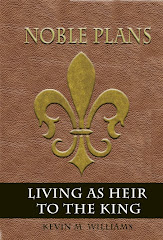
From the book Noble Plans:
It seems that in every generation, a new voice arises to this sense of nobility, or at least the desire to experience it. In the 1960’s, we had the Kennedy Whitehouse. Though I was a young boy at the time, the country seemed alive with a new sense of vigor and hope placed in the new “Camelot.” Yet as the years have gone by, all that glimmered was not gold. Decades later, the Kennedy administration is often remembered more for scandal and philandering than the noble ideals of Arthur’s Round Table. However, the dream of the Kennedy Camelot lives on unabated, revisited briefly in the 1990s during the Clinton Administration and hinted at again in the current Obama White House.
Camelot is ingrained into our cultural consciousness. Her ideals are indefatigable. We all yearn for the Kingdom of Summer where right trumps might. But for too many, they are only ideals, a glimmering wish for our troubled times.

British Prime Minster Margaret Thatcher once said, “Unless we change our ways and our direction, our greatness as a nation will soon be a footnote in the history books, a distant memory of an offshore island, lost in the mists of time like Camelot, remembered kindly for its noble past.”

The Bible is far more succinct: "Pride goeth before the fall" (Pr 16:18). When might supersedes right, when justice is redefined to fit the situation rather than the rule of law, when morals are defined by politicians rather than the Supreme Authority, then we all risk being that "footnote in the history books."

The Bible points to a realm greater than Arthur's, a majesty far beyond Camelot: "Seek ye first the kingdom of God" (Mt 6:33). Evil found Camelot arrogant, and wrought ruin upon Arthur and the Golden City. Mankind has yearned for it ever since. But the Round Table was only a symbol, a shadow whose reality is cast by Christ and the Kingdom of Heaven, our true home and the answer to that deep yearning.
Behold, a king will reign righteously, And princes will rule justly.
And each will be like a refuge from the wind, And a shelter from the storm, Like streams of water in a dry country, Like the shade of a huge rock in a parched land.
Then the eyes of those who see will not be blinded, And the ears of those who hear will listen.
And the mind of the hasty will discern the truth, And the tongue of the stammerers will hasten to speak clearly.
No longer will the fool be called noble, Or the rogue be spoken of as generous.
For a fool speaks nonsense, And his heart inclines toward wickedness, To practice ungodliness and to speak error against the LORD, To keep the hungry person unsatisfied And to withhold drink from the thirsty.
As for a rogue, his weapons are evil; He devises wicked schemes To destroy the afflicted with slander, Even though the needy one speaks what is right.
But the noble man devises noble plans; And by noble plans he stands (Isaiah 32:1-8).


"A noble man devises noble plans; and by noble plans he stands" (Isaiah 32:8)

Saturday, July 4, 2009

THE YEARNING


“The yearning for regal bearing is there, deep within our hungry souls, but the actualization, the manifestation of that truth is often resigned to children’s fairy tales, myth, and surrendered to the realm of legend”—from the upcoming book, Noble Plans.

When I share my heart behind Noble Plans there are generally one of two responses. There are those who immediately grasp the concept because it has been playing in the back of their minds for years. They latch onto the virtues of noble living as if they had needed permission.

Then there are those who glance at me askance as if to say, “Yea, right. You go on telling yourself that, but life doesn’t work that way.” They are the ones who somewhere deep inside yearn to make noble plans, but have relegated their regal calling to the realm of fairy tales and legend.

I cannot blame the second group. Most of them have be taught, either by those in authority or by life’s hard knocks, that regal living is myth. Their skepticism has its reasons. Sadly however, it denies the words of Scripture:
  • “You are already filled, you have already become rich, you have become kings” (1 Corinthians 4:8).
  • “But seek first His kingdom and His righteousness . . .” (Matthew 6:33).
  • “For consider your calling, brethren, that there were not many wise according to the flesh, not many mighty, not many noble” (1 Corinthians 1:26).
  • “He raiseth up the poor out of the dust, and lifteth up the beggar from the dunghill, to set them among princes, and to make them inherit the throne of glory” (1Samuel 2:8).

The Bible holds many, many more such examples.

If you are eager to embrace a noble life, then do so. If there is a yearning burning inside you to live as a princess or prince of the Great High King, then wait for no one — embody those principles!

If on the other hand, you think the ideal is fine, but the actualization too far a stretch, then reexamine the Scriptures. Has God called you spiritually to live as a prince or as a pauper?


"A noble man devises noble plans; and by noble plans he stands"

Saturday, May 9, 2009

CHIVALRY - IS IT DEAD?


Chivalry – a definition:
“Chivalry was the knight's code of behavior. The code of chivalry grew with the songs of the minstrels in the 1000's and 1100's. Their poems show that a true knight had faith and a deep love of the Christian religion. He defended the church and was ready to die for it. He loved the land of his birth, and gave generously to all. His strength served to protect women and the feeble. A knight championed right against injustice and evil, and never surrendered or flinched in the face of the enemy.”*

Certainly this is how we choose to remember chivalry. It is the ideal, the much-romanticized principles that fill our bookshelves and imaginations. It represents the best, our hopes, and the glory we all wish for ourselves, for our politicians, and our world.


Chivalry - the historical truth:
“In real life, a knight did not always resemble the ideal knight of the minstrels. His code of honor and loyalty was sometimes applied only to members of his own class, and he often acted brutally toward people of low birth. The violent life of the Middle Ages made it difficult to prevent violations of the code. Even dedicated knights were also soldiers interested in conquest and plunder. A knight who was proved guilty of cowardice or other serious misconduct was disgraced by having his sword and his spurs broken. However, ‘serious misconduct’ usually meant violations against other knights and their families.”*

So what is the application to life today, a millennium removed from those “songs of the minstrels?”

The ideal of chivalry is infused throughout our culture—it’s inescapable. But it did not evolve in a vacuum. Its foundation is grounded in a biblical faith. And like the ideal of chivalry, the biblical expression entails a deep love of and faith in God (Matt 22:37) and a giving spirit (1 Tim 6:18). We are commanded to care for the widow and orphan (Jas 1:27), to champion justice (Deut 16:20), and to resist evil (Jas 4:7).

Do you meet the measure of chivalry’s ideal? Or are you more like the real-life knight of history?—a thug merely masquerading as a believer? If the latter, then you need a noble plan by which you can stand. If the former, then stand by your plan safe in the knowledge that you are perusing a regal life.

*WorldBook 2004, Contributor: Joel T. Rosenthal, Ph.D., Professor of History, State University of New York, Stony Brook.


"A noble man devises noble plans and by noble plans he stands"

Saturday, May 2, 2009

Protect & Defend Movie Week

This week on the Disney XD channel is called the "Protect & Defend Movie Week," with film greats such as The Lion, the Witch and the Wardrobe (2005), Eragon (2006), and The Incredibles (2004).

I enjoy all three films. They're filled with overcoming great odds, believing in something greater than yourself, and the most popular theme of all time – good versus evil. I don't think I'm alone in my appreciation. Millions upon millions of men, women, and children went to the cinema and bought DVD or digital copies.

Films are an important part of our pop culture, but they reveal a lot more. Each of these movies, for instance, is about simple folk reaching beyond themselves to discover a fantastically noble person inside. Each of these movies demonstrates moments of choosing to do the right thing despite the potential, personal loss. And each give the viewer an all around "good feeling" inside.

A couple of years ago, in a conversation with singer, songwriter, and author Michael Card, he told me that his mentor, Dr. William Lane believed that every Hollywood film has a messianic theme. Since that time with Michael, I've thought long and hard about that as I watch movies to conclude that he is right. Despite our cultural rejection of Christ and the Bible, there remains an avid hunger for a redeemer . . . and it shows in our blockbuster films.

Next time you go to the movies, as you munch on that popcorn and take in the silver screen, keep an eye open for that messianic character up there who saves the day, or makes the ultimate sacrifice. And when someone asks you what you thought of the movie, you'll have a new way to share your faith. Now that's a noble plan!


"The noble man devises noble plans and by noble plans he stand"

Monday, April 27, 2009

YOUR ROYAL LINEAGE

“When you deny that personal lineage, you abdicate your royal standing in God’s community to one of poverty and peasantry. Like Isaac’s son Esau, you surrender your holy birthright for a bowl of stew when you have been promised a King’s banquet!” – Noble Plans, p. 11

In the story of Esau and Jacob, I often think that Jacob gets the short end of the stick. Our theological heritage has painted this son of Isaac into the usurper’s corner. Yes, Jacob means “supplanter,” but maybe, just maybe that was by design as a matter of who Jacob was not what Jacob did. God designed Jacob to supplant for His perfect purposes, to supplant the wicked and unrighteous.

It is often overlooked, but in Genesis 25:27, the text says, “Jacob was a perfect man . . .” Some of your translations may call him a “peaceful” or “plain” man, but the Hebrew is quite clear: “perfect, undefiled, upright,” or “wholesome.” It’s my belief that some translators could not harmonize their perception of Jacob as a smarmy usurper with someone “perfect,” so they compromised on “peaceful.”

But to the matter at hand.

It is an often-told story: Esau comes home hungry—some translations say “famished,”—and he flippantly trades his birthright as Isaac’s firstborn for a bowl of “that red stuff there” (Genesis 25:30). In a heartbeat, with no seeming regard for consequences, this father of the Edomites has not been supplanted; Esau surrenders his royal standing as technically, the Prince of the Holy Land.

Esau is not alone.

How often do we abdicate our royal standing to pursue earthly pleasures? How often do we chase after being right over being righteous? How often do we, like Esau, surrender our royal station for some of that “stuff” – whatever that “stuff” may be?

Lords and Ladies, you have been invited to eat at the king’s table. Yours is a position of high favor. A crown awaits you. Why settle for poverty and peasantry when you are of royal lineage?

“And hath made us kings and priests unto God and his Father; to him be glory and dominion for ever and ever. Amen” (Revelation 1:6).


“A noble man devises noble plans and by noble plans he stands”

Sunday, April 26, 2009

CHECK YOUR COMPASS

“Commit to the Lord whatever you do
and your plans will be established.”
—Proverbs 16:3

It's likely time to address a topic that is not covered in total in the book Noble Plans. It was always my hope that there would be an internet-based opportunity to develop and augment the content in the book, and am thankful for this blog.

Proverbs 16:3 above is also translated as "Commit to the LORD whatever you do, and your plans will succeed," in the NIV. That's not what is in the above verse, out of the New American Standard Bible.

In a nutshell: just because you commit to noble plans for your own life, there is no guarantee they "will succeed" as the NIV translators put it. That's not how it works.

The Hebrew word for "established" or "succeed" in these two translations is kuwn, which means "prepare, be ready, direct," or "confirmed." There is no inference that "success" is a natural byproduct.

Noble Plans is about how you live, how to bring your heart and mind into greater harmony with one of God's bigger pictures. But as with anything, there are always obstacles and temptations, and often, ignobility will sneak in and win the day.

But if your plans are noble, if you stand by them, they do become who you are rather than what you do, and as long as you remain committed (established) – that is to say as long as you stand by your plan – you will do well – even if you do not always succeed, even if you do not win each and every battle.

If you approach noble living with that attitude, rather than, "If I do it this way God must guarantee my success," then in truth, you will succeed.

Noble Plans the book as well as noble plans the biblical principle, are a spiritual compass to keep you pointed in the right direction. But for a compass to work, you have to look at it – often. Otherwise, you can drift degree by degree until your ways are no longer as established.

Make your noble plans, commit them unto God, stand by them, and check your compass routinely.

"The noble mane devises noble plans and by noble plans he stands."

Wednesday, April 22, 2009

M'LADY

My lovely wife bears the legal title, “Lady” under Scottish law and she has the certificate to prove it. She has never been to Scotland. In fact, she is 100% Italian. But she owns a small plot of land (it could accommodate a lawn chair, it is so small) that affords her the privilege to use the title “Lady.”

Of course, it was a birthday gift several years ago, and a well received one at that, but here it makes for a wonderful illustration.

Centuries ago, the only way a woman could gain the title “Lady,” or any royal title shy of being the king’s princess, was to marry into one. Now before anyone thinks me a chauvinist for bringing it up, it remains true for everyone who claims Jesus as Messiah.

We all, whether man or woman, are the betrothed Bride to the King of kings and Lord of lords. Our inheritance as the Bride, with the prophesied privilege to reign and rule with Him is wholly dependent upon the holy Bridegroom. To that end, all who call on Jesus as Savior and Lord, bear the title prince and princess, lord and lady.

Now imagine if you will, what would life be like in the Body of Christ if we all thought of one another as regal inheritors of the Throne – far from common and everyday – but noble and high? How might relationships change if we recognized one another as royal?

Now that’s a noble plan! Give it a try, and leave comments here how it changes you!


"The noble man devises noble plans and by noble plans he stands."

Saturday, April 18, 2009

WHAT WAS YOUR DEFINING MOMENT?

"Whoso Pulleth Out the Sword of the Stone and Anvil,
is Rightwise King Born of All England."
(T. H. White, The Sword in the Stone)


Our films and books are rife with defining moments, that moment in time when one reality passes and something new emerges. For Bruce Wayne, it was the death of his parents that transformed him into the Batman. For Gandalf, the wizard in Tolkein’s classic The Lord of the Rings, it was standing toe-to-toe with the maleficent Balrog, when he changed from “the Grey,” to “the White.” For the youngest son in the line of Jesse, it was picking up five smooth stones to fell the great giant Goliath.

But perhaps no defining moment has been told and re-told, as many times as King Arthur, when he drew the sword from the stone. In the span of a heartbeat he went from being a commoner to High King of all England, and whether fact or fiction, the legend set in stone the ideal and noble standard for all of Western civilization.

Many of you have had defining moments. Character transformations born out of grief, abuse, and trauma, and those events forever shaped who you are today. They color every relationship in your life.

Let me ask this . . . when did you pull your sword from the stone? By that I mean, when did you take hold of your destiny as heir to the Throne of the Most High King and become an “heir according to promise” (Gal 3:29)? Was there that defining moment in your life when you turned it all over to the Messiah of Israel – the anointed One – and became not just a citizen of the everlasting kingdom, but an inheritor, a prince or a princess?

My friends, there could be no more noble plan than that, no intention more meaningful or delightful, ripe with promise and Providence! If you look back on your life and see a hurtful moment that forged who you are today, then you have not yet pulled your sword from the stone.


"The noble man devises noble plans and by noble plans he stands."

Monday, April 13, 2009

EVERY HOPE OR DREAM

“Every hope or dream of the human mind will be fulfilled if it is noble and of God” (Oswald Chambers’ My Utmost for His Highest).

Photobucket

Almost every day of my life begins with the daily devotional My Utmost for His Highest. This sentence from the February 22 reading is a two-pronged statement. “Every hope or dream of the human mind will be fulfilled” 1) “if it is noble” and 2) if it is “of God.” The two principles cannot be separated or you will always have imbalance and undesirable consequences..

Oswald Chambers ads to this principle in his March 22nd devotional: “The things we are going through are either making us sweeter, better, and nobler men and women, or they are making us more critical and fault-finding, and more insistent on our own way.”

In the days of yore, when there was a “noble class” in charge, they rarely ever turned out to be noble in character. They were more often than not little more than thugs, legal thugs taking what was not theirs, over-taxing the poor, and seeing to it that their own interests were paramount. Some acted in “the name of Christ” to their deeds, but that was only a means of slathering a foul stench with much perfume.

If you have the true and undefiled mind of Christ nurturing in your soul, then you cannot help but be turned toward the noble-minded. If your hopes and dreams are of God, then they are noble because they cannot be anything else.

That of course, is no guarantee that God is obligated to fulfill hopes and dreams. Hopes and dreams are to be brought subject to God’s will, not the other way around. Chambers also writes, “If our hopes seem to be experiencing disappointment right now, it simply means that they are being purified.”

If you are experiencing disappointments and frustrations, consider recasting your hopes and dreams, carefully taking every thought captive to the obedience of Christ (2 Corinthians 10:5). “We will readily give up sin and worldliness, but God calls us to give up the very closest, noblest and most right tie we have, if it enters into competition with His call” (So Send I You, Oswald Chambers).

“The noble man makes noble plans and by noble plans he stands”

Saturday, April 11, 2009

WHAT DOES "NOBLE" MEAN?

From the introduction to Noble Plans: Living as Heir to the King

The apostle Paul tells us, “Whatever is true, whatever is noble, whatever is lovely, whatever is excellent, whatever is praiseworthy: think about such things” (Philippians 4:8, NIV). He goes on to promise that when you “think on these things” the “peace of God which transcends all understanding will guard your heart and mind in Christ Jesus.”

My mind grasps the concepts of true, lovely, excellent, and praiseworthy easily enough. The Bible and the world God created provide ample examples from which to learn true, lovely, excellent, and praiseworthy. My mind can take hold of these concepts and process them readily—but what about “noble?” If the Bible provides examples and instruction on “true, lovely, excellent, and praiseworthy,” then certainly there are models for “noble” and nobility.

This raised new questions. What does “noble” mean in today’s society? What did it mean in the biblical age? How does the Bible define this word “noble” that finds its way into everything from classical literature to action hero movies? For me, noble had always been some vague notion in the back of my mind born out of my high school European history class or classic literature like Sir Walter Scott’s Ivenhoe or Sir Thomas Malory’s Le Morte D’arthur. How could I—an average “nobody”—sincerely follow Paul’s admonition to “think about such things” as nobility without a biblical and therefore, foundational understanding of what it means to be noble?

Dr. Warren Wiersbe, referencing Romans 5:17, writes, “Because we belong to the family of the King, we can ‘reign in life by one, Jesus Christ.’”* In other words, if you are of the household of faith dear reader, then you are of noble re-birth, and that is a pedigree worth celebrating!

The emphasis of Noble Plans (and this blog) is based on an oft-overlooked passage of Isaiah: “The noble man devises noble plans; and by noble plans he stands” (Isaiah 32:8). When I first read this verse, I was enthralled with its implications. Paul’s admonition in Philippians—to think on noble things—was brought home in a new way as I rolled Isaiah’s words around in my mind. Soon I found more and more references to “noble” in the Bible like threads of continuity woven into the majestic tapestry.

I wondered at writing on the subject and committed to this plan, and stand behind the plan that God desires all of His children to be noble. It is my hope that God will plant in you noble plans and that these plans will see you through all of your days.

"The noble man devises noble plans, and by noble plans he stands"

*Heirs of the King, Discovery House Publishers, Grand Rapids, MI

Friday, April 10, 2009

PRINCESS POWER

“Kings’ daughters are among Thy noble ladies” (Psalm 45:9).

Photobucket

Okay, I admit it. I refer to each of my daughters as “princess.” Yes, it’s a stereotypically “dad” thing to do and I am exceedingly pleased to use the label. I likely always shall.

Sadly, in today’s world, “princess” is also oft considered chauvinistic. In my opinion, that’s a deleterious move to once again rob young women of dignity and respect. The thinking goes that if she is a “princess,” then she needs a prince to save her.

One might think that the princess appellation would be driven from our culture, relegated to history books and twisted into examples of female oppression. In fact, there is a move afoot to erase it from our cultural expression.

Thankfully, that’s unlikely to happen if the Disney Corporation has anything to do with it. Last fall I attended a workshop by marketing guru, Ira Mayer. His inside information is that every three years, Disney rotates their marketing campaigns between fairies and princesses. Why would they do this? Because they know that within the heart of every little girl, lives a princess waiting to get out.

In Noble Plans I write: “I believe that there is within each and every person, both inside and out the community of the redeemed, a deep and residing passion for personal nobility; a nobleness mirrored in the One in whose image we were created. Every person on earth, as the Scriptures tell us, is created in the “image” of God – the Lord of the universe – and as such, we have implanted within our core the image of nobility, a resemblance of the Sovereign Creator. If the Almighty God, Supreme Ruler of the universe and King of all the earth is the image reflected in us, then by default, we have within our souls the potential for a most royal bearing.”

Of course, “prince” and “knight” resonates in the hearts of boys in much the same way. Robert Lewis writes, “Who among us as boys didn’t thrill to the legends of King Arthur and the Knights of the Round Table? The knight survives in our collective consciousness like an ancient Superman, committed to a code of conduct . . .” (Raising a Modern-Day Knight, (c) 1997, Tyndale House Publishers, Carol Stream, IL, p. 12)

As noted in the verse above, the psalmist speaks of the King’s daughters. The king in this context is of course, God Almighty, making the daughters what? Princesses. These daughters are among God’s “noble ladies.”

But here’s the crux of the matter. As a society, we have relegated knights and princesses to the world of children. Let’s be honest. We all want to be lifted up. Somewhere inside you is a prince or princess waiting to be released.

“He raises the poor from the dust, And lifts the needy from the ash heap, to make them sit with princes, With the princes of His people” (Psalm 113:7-8).

Don’t wait any longer. Be that person. You are royal. You are of a supreme lineage!

“The noble man makes noble plans and by noble plans he stands”

Saturday, December 6, 2008

FEASTING

"He that is of a merry heart
hath a continual feast."
Proverbs 15:15

If you're like my family, dinner is decided by the one with any energy left. Through the ages, meals have typically been a time to reconnect with family and loved ones. But in this day and age, it's often a matter of what can be tossed in the microwave before someone has to be shuttled to, or picked up from, the next event. The busyness of life can be the very enemy of making and keeping noble plans.

Back in the early 1990s, we adopted the idea of a royal feast. Every Friday evening the rigors of the week are set aside for a sumptuous meal. We're pretty frugal every other day of the week, eating a lot of inexpensive and convenient meals. But on Friday night, the taste buds can't wait.

The regular dishes are set aside for platters, glasses for goblets, and the counter top is set. There's the roast, usually at least 3-hours in the oven so the meat is juicy and tender. Sumptuously simmered garlic mushrooms, piping hot potatoes (or yams) oozing with butter, slices of tangy cheddar cheese melted over luscious green broccoli, and specially bought bread!

There are prayers of thanksgiving, a shared cup, a shared piece of bread, and a feast where we laugh and enjoy one another's company around a candle lit table. It is one of the rare moments in the week when all seems right with the world.

It's a noble plan that has served us well, that honors God, and lets us relax and enjoy what the Almighty has provided. Try it. You may find it becomes the one time of the week when everyone looks forward to being together!

"A noble man devises noble plans and by noble plans he stands."